"Sight Glasses with controlled positioning of the window in relation to the process side."
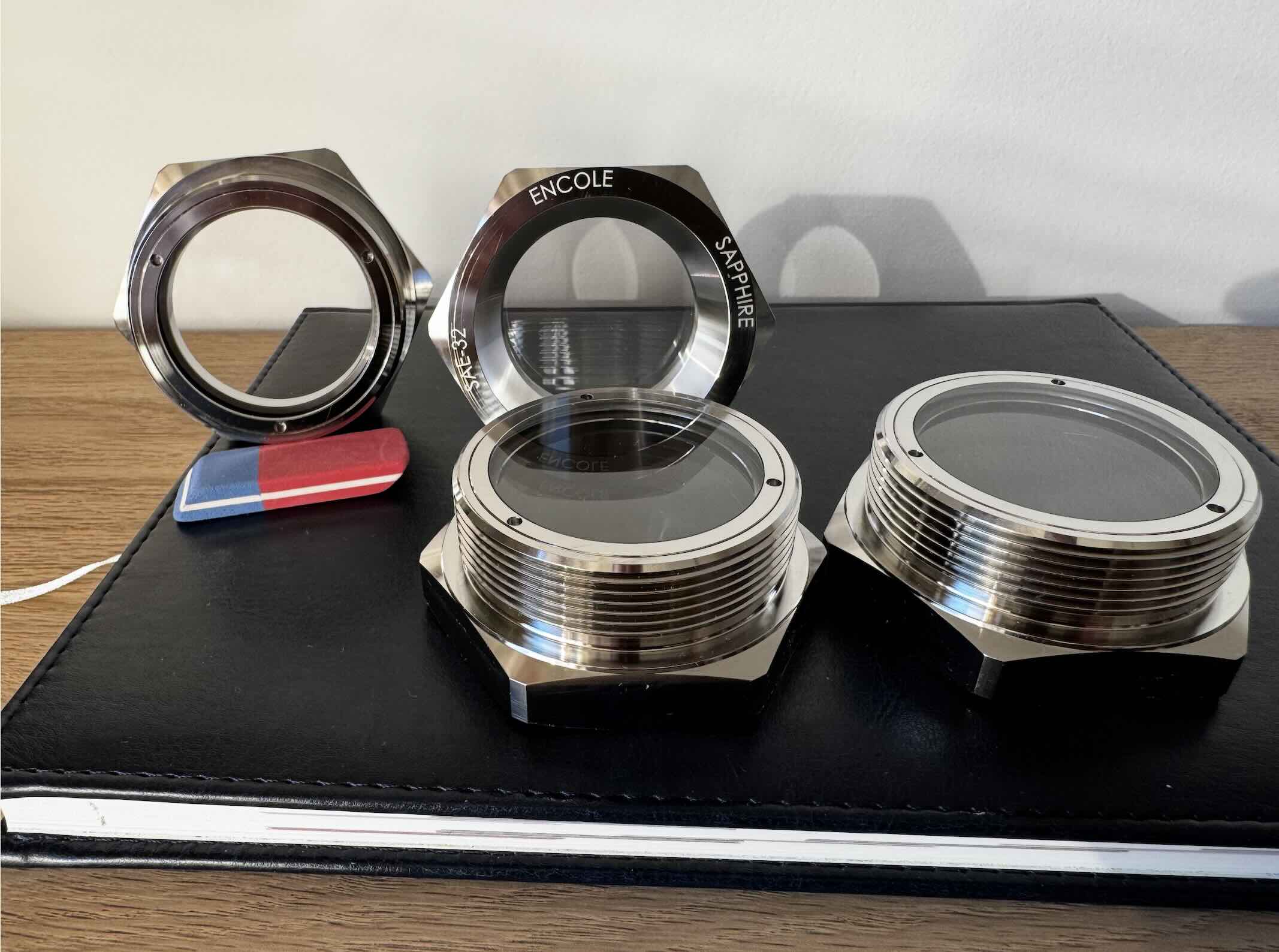
Threading a sight glass into a process vessel remains one of the most established and reliable installation methods. Many types of threads are used, and we tried them all, from straight to tapered. One interesting application involved ACME threads, where the sight glass was supposed to move in and out of the vessel, while maintaining a hermetic seal. This is done with radial sealing, as opposed to a face seal as in most sight glass applications. Most common threaded sight glass types have tapered threads made to the NPT standards.
While NPT sight glasses, are most common for high pressure, SAE affixation method offers one significant advantage: SAE interface provides controlled, repeatable positioning within the vessel. SAE geometry stops the sight glass at the exactly same distance relative to vessel features. The standard geometry defined by SAE J1926 plays a central role in this performance. It specifies the port bore designed to accept a male boss conforming to MS 16142. When installed, the boss lands on the port’s top shoulder, creating a metal-to-metal hard stop. This provides both structural stability and precise alignment. The threads themselves serve only to retain the sight glass under pressure, while sealing is achieved independently through an external O-ring.
Notice the separation of mechanical retention and sealing. This is the key to the reliability of SAE sight glasses. The external O-ring forms a hermetic seal through a three-point contact: the top flat surface, the inner cylindrical wall, and the tapered outer surface. Because the O-ring is not dragged across a flat sealing face during installation, wear is minimized. This contrasts with face-seal designs such as those defined in SAE J1453, where the O-ring experiences friction as it is compressed into its groove. Reduced wear directly translates into improved sealing integrity and longer service life.
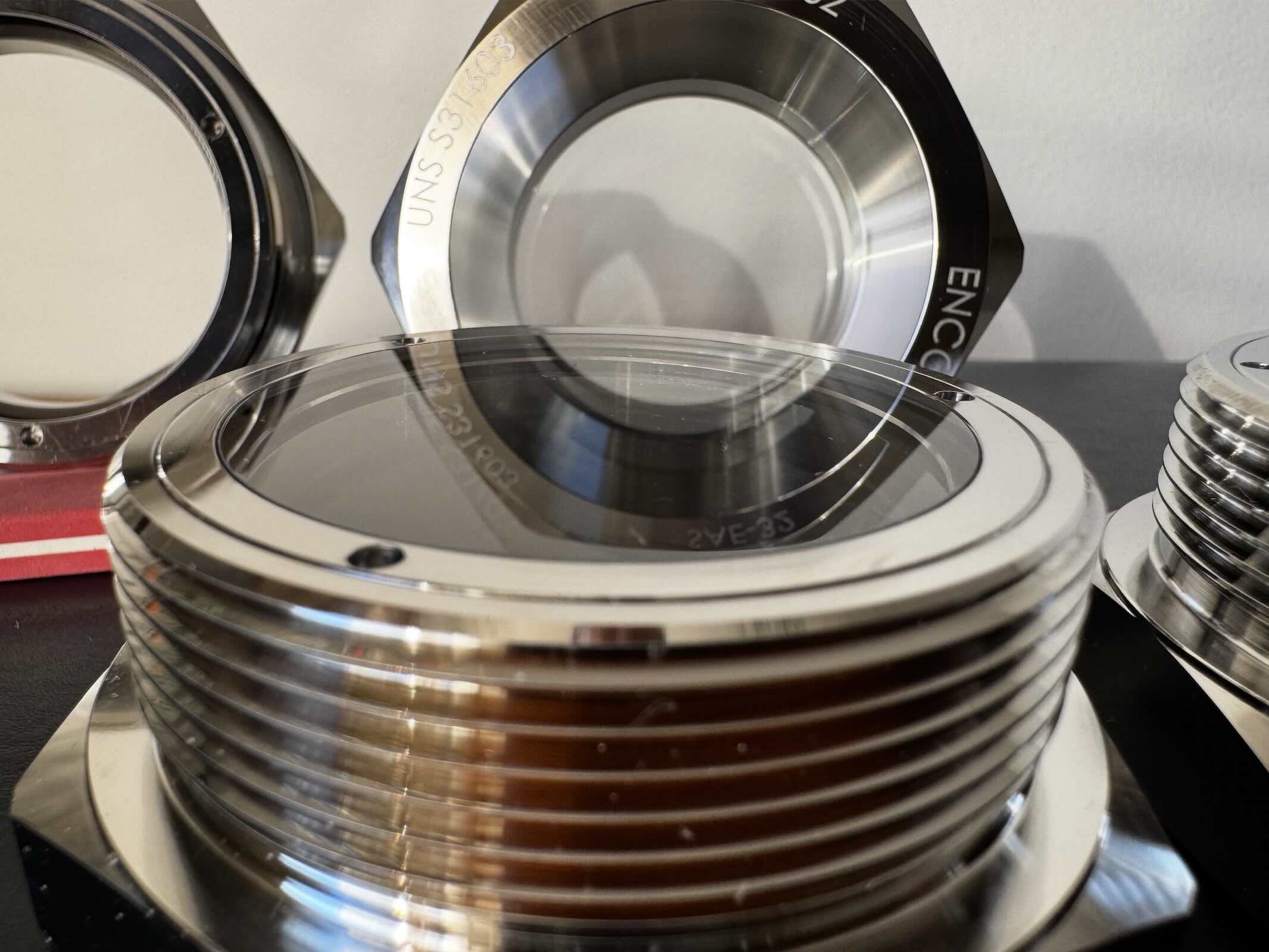
Encole’s implementation of SAE sight glasses builds on these principles by combining straight-thread reliability with optimized sealing and surface continuity. The result is a flush sight glass design that enhances visibility and offers cleaner, more efficient process observation. By eliminating trapped volumes and ensuring a smooth internal profile, SAE sight glasses are a preferred solution for applications where precision and sealing are critical.