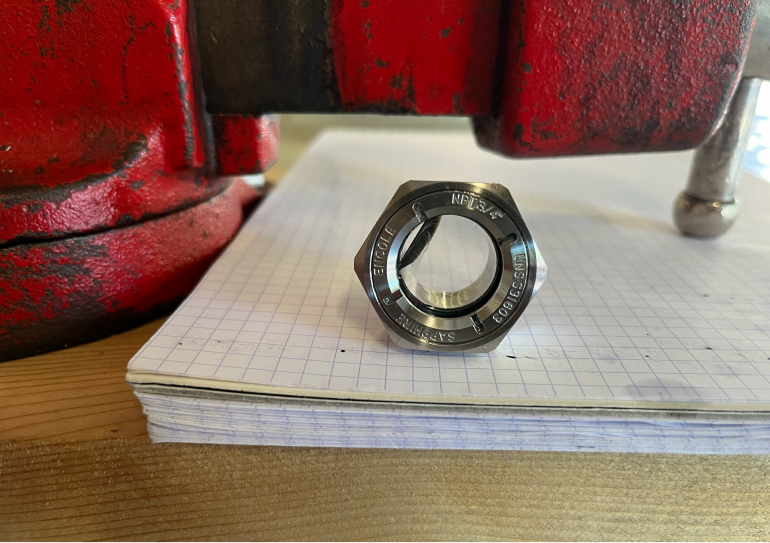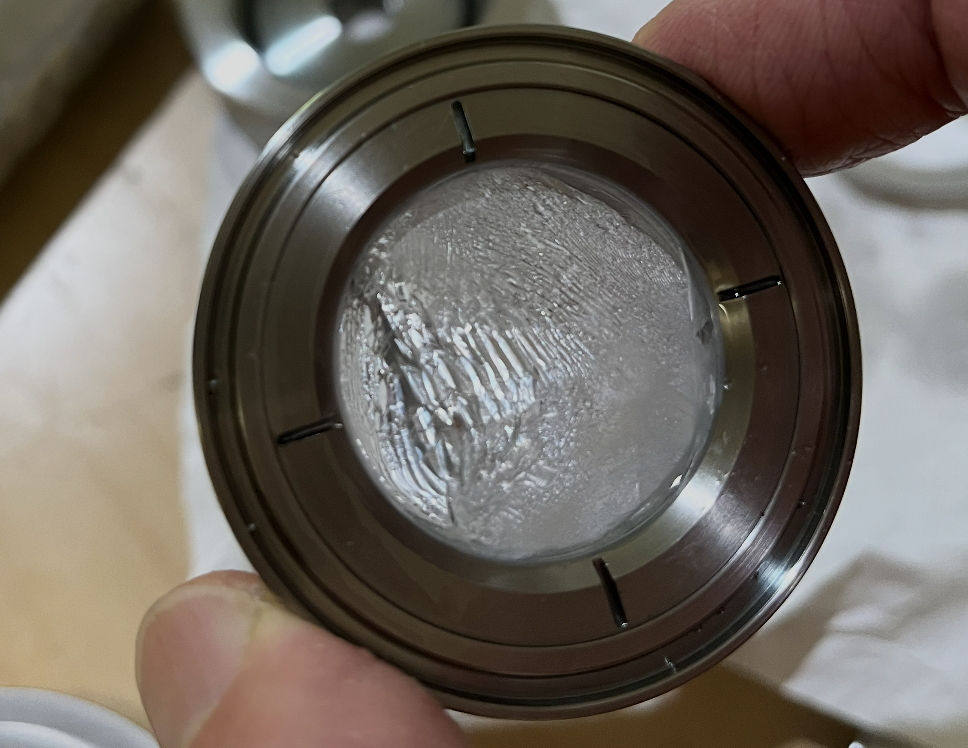
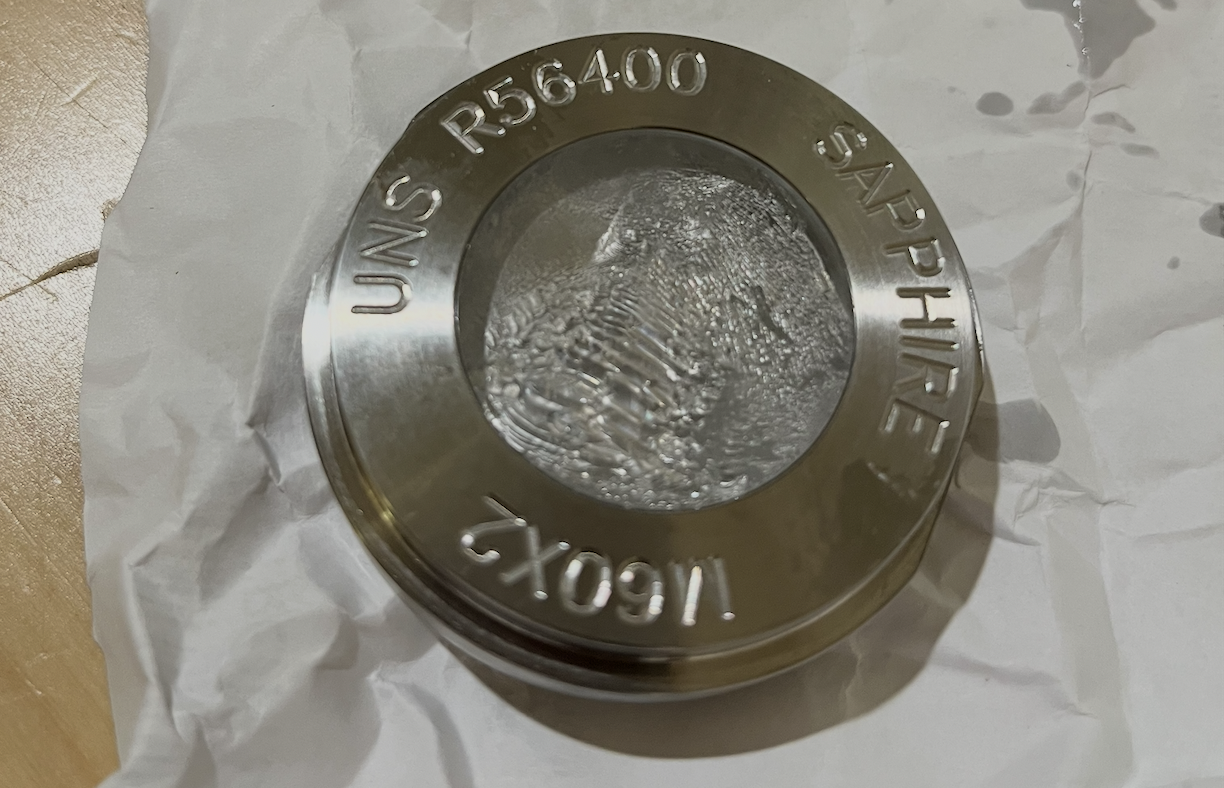
Sapphire windows are widely used in high-pressure optical systems and industrial sight glasses because of their exceptional strength, hardness, and optical clarity. These high-pressure sapphire windows are critical in applications ranging from CO₂ refrigeration systems to scientific instruments and power electronics cooling.
Even though sapphire is extremely strong, it is also a brittle material. Under hydrostatic pressure, it can fracture, and the way it cracks depends on its crystal structure and orientation. Understanding how C-axis sapphire disks fail is essential for engineers designing safe, reliable windows and interpreting hydrostatic rupture testing results.
Sapphire is a single crystal of aluminum oxide (Al₂O₃) with a hexagonal structure. The C-axis is perpendicular to the basal plane, and most optical windows are cut with their faces parallel to this plane. This orientation provides high compressive strength along the window face, excellent optical uniformity, and predictable elastic behavior under pressure. However, sapphire is anisotropic, meaning its strength varies depending on the crystal direction. Cracks tend to propagate along cleavage or fracture planes, which are inherently weaker, even when the applied pressure is uniform. This crystallographic behavior largely governs how and where sapphire fails under hydrostatic testing.
During hydrostatic rupture testing, pressure is applied evenly across the surface of the sapphire window. Even under this uniform loading, the sapphire disk experiences a combination of internal stresses. The center undergoes compression through its thickness, while the low-pressure side experiences tensile stress due to bending. Edges and mounting points can also develop shear stress concentrations.
Although sapphire tolerates very high compressive stress, cracks initiate when tensile or shear stress exceeds the crystal’s fracture toughness. In C-axis sapphire, these cracks do not form randomly. Instead, they propagate along preferred crystallographic planes, resulting in highly predictable fracture patterns.
Cracks usually begin at points of highest stress. The tensile surface opposite the applied pressure, edges, chamfers, and even microscopic defects from polishing are typical initiation sites. Once a crack starts, it follows the crystal’s weakest planes. For C-axis sapphire, these include the basal planes perpendicular to the C-axis and the prismatic planes that run parallel to it. The fracture patterns that emerge are often radial, star-shaped, or hexagonal. Because sapphire is brittle, this failure is sudden, with stored elastic energy released almost instantaneously. This behavior explains why sapphire windows can appear flawless until they fail abruptly under extreme pressure.
Hydrostatic rupture testing is critical for understanding the real-world strength of sapphire windows. It allows engineers to determine the true burst pressure, verify safety margins, and identify weak points such as edges, chamfers, or mounting designs. Testing also highlights how crystal orientation affects failure and shows how even tiny surface flaws can significantly reduce rupture pressure.
By revealing the exact failure points and fracture patterns, hydrostatic testing provides invaluable data for designing high-pressure sapphire windows that are both strong and reliable.
Knowledge of how C-axis sapphire cracks allows engineers to design safer windows. Proper edge finishing and chamfering reduce stress concentrations at the perimeter. Mounting techniques that minimize tensile stress help prevent premature failure. While the C-axis orientation provides excellent compressive strength, engineers must account for the inevitable propagation along cleavage planes. Hydrostatic rupture testing validates these designs, ensuring sapphire windows can withstand pressures well beyond normal operating conditions. By understanding failure mechanisms, engineers can maximize the material’s strength while maintaining optical clarity and reliability.
C-axis sapphire windows do not fail because sapphire is weak—they fail because brittle materials have inherent limits. Hydrostatic rupture testing reveals exactly where and how cracks propagate, providing engineers with the information needed to design safe, high-pressure optical windows.
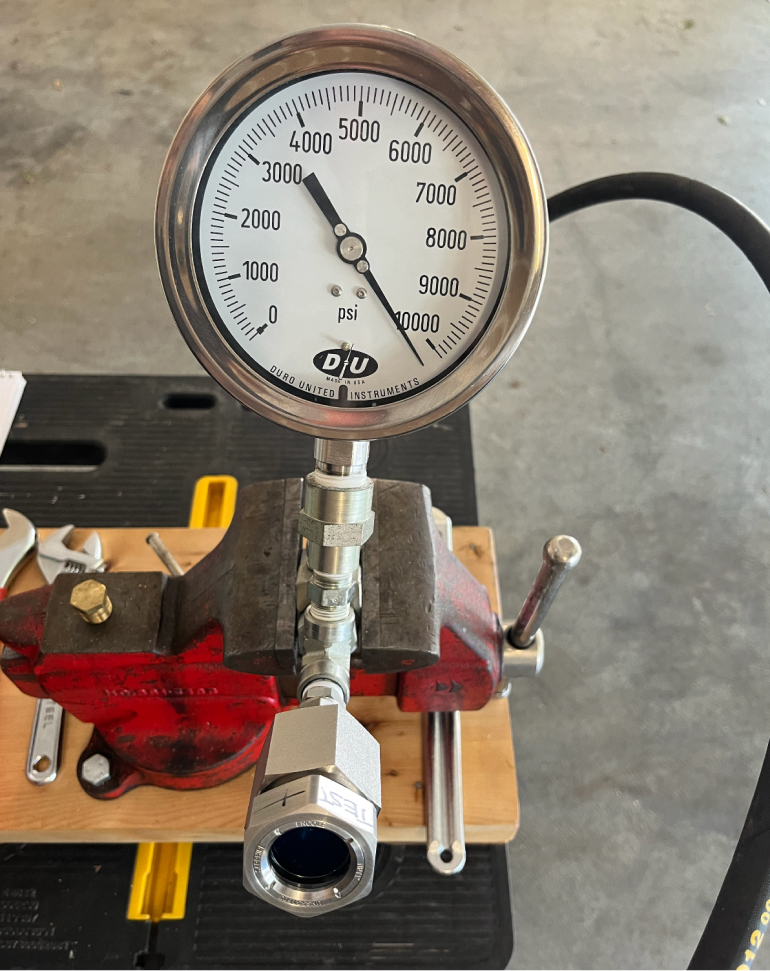
All sight glasses passed the tests at the target pressure. One unit NPT size 3/4" cracked at 10300 psi after 15 minutes under pressure. The window had a hairline crack, the test fluid leaked out a little and the pressure slowly decayed to ambient.