"A window that behaves like a wall, not like a fixture. The underlying logic of positioning the sight glass "precisely within the process volume", not simply installing an optic that can withstand pressure, but shaping and placing it such that from the process's point of view, it was never there."
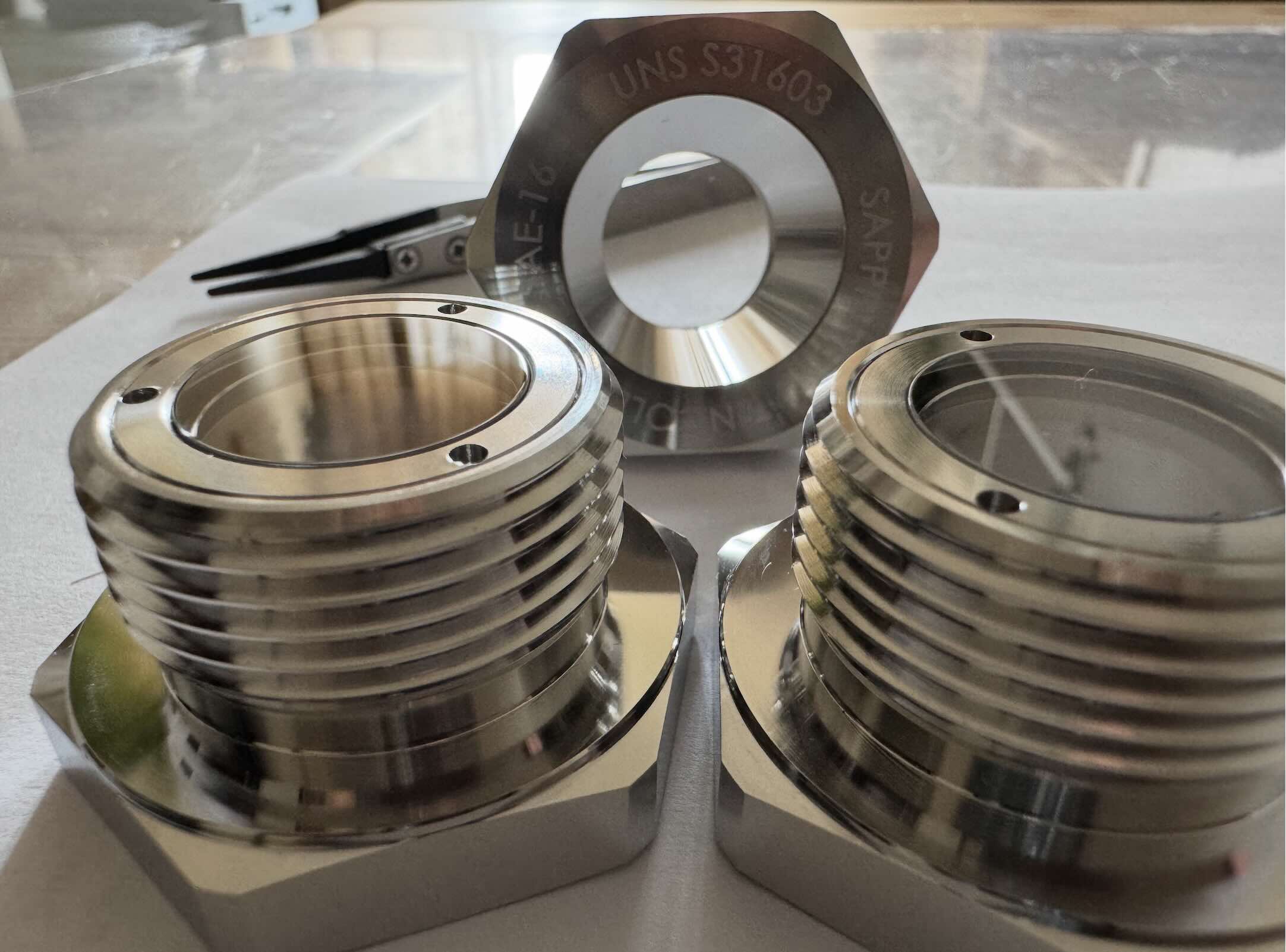
Sight glasses touch the very process media they are observing. They are supposed to be invisible to the process, not to disturb it, yet they are present there. They are necessary to complete the physical boundary of the volume where research happens.
The ideal sight glass would simply disappear into the process wall, unnoticed by the flow inside the process vessel. From the design perspective, the optical element of the sight glass should be perfectly flush with the metal encasing that optic. To specifically address this design, Encole developed a high pressure sight glass with a smooth pressure side window. In a standard SAE J514 geometry, a sapphire window is flush with the metal housing facing the pressure.
A sight glass is a mechanical feature of the vessel wall. Its geometry inside the process volume matters just as much as what it lets you see through.
Any step, recess, or protrusion at the point where the window meets the housing becomes a discontinuity in the internal surface of the vessel. In a flowing process, that discontinuity is a site for turbulence. In a static or slow moving process, it's a place where material can collect rather than pass by. Either way, the sight glass stops doing its one job, which is being invisible to the process, and starts becoming part of it.
The design response to this is straightforward: the sapphire window and the surrounding metal housing must sit in the same plane, with no ledge between them. Encole's SAE sight glasses are built around exactly this requirement. For a smooth pressure-side window specifically, that flush transition sits directly in the wetted path. The sapphire window is flush with the housing at the pressure side, which eliminates turbulence at the window boundary layer, and the smooth transition between window and housing removes any space where bubbles could become trapped.
That last point is worth sitting with. Bubble accumulation isn't just a cosmetic nuisance that fogs the view. It's a direct consequence of geometry. Any recessed lip or gap at the window edge acts as a pocket where gas can nucleate or collect, shielded from the bulk flow that would otherwise sweep it away. A flush window removes the pocket entirely, so there is nowhere for a bubble to lodge and nothing for the observer to mistake for a process artifact.
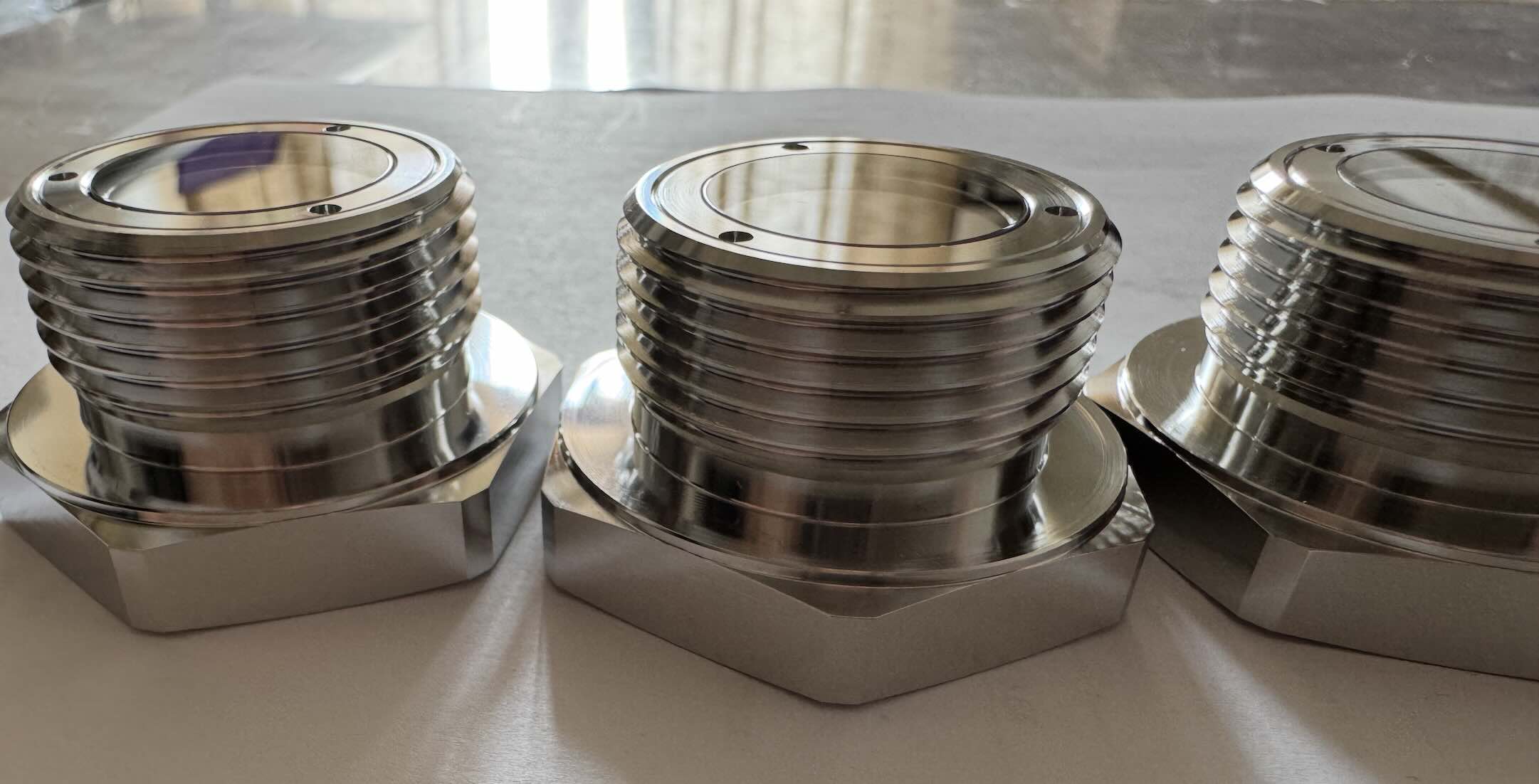
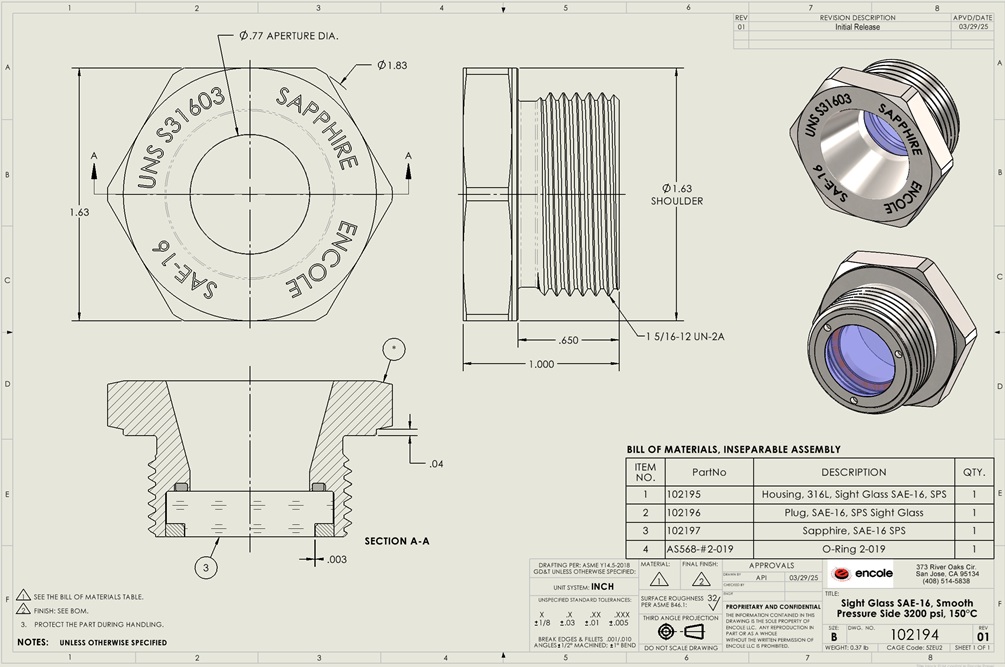
This flush design isn't a proprietary port shape that only fits one manufacturer's hardware. It's built onto the SAE J514 boss geometry, a widely used standard for O-ring boss (ORB) fittings. Encole's sapphire sight glasses are manufactured to that recognized standard, alongside ASME B1.20.1 for NPT-threaded versions. Sight glasses are manufactured to recognized industry standards, ensuring compatibility with standard ports, fittings, and pressure-rated systems. The SAE sight glass follows SAE J514. It mounts as an O-ring-sealed boss into a port machined to the companion SAE J1926-1 port. Product details: Part Number 102194. All features of the female port can be manufactured in one step, using porting tools available from standard machine tool suppliers. That means the flush-window benefit isn't dependent on a custom weld-in fixture. It drops into a port that a shop can cut with off-the-shelf tooling, and the same O-ring seal can be broken and remade multiple times without compromising the hermetic boundary.
Put together, the result is a sight glass that satisfies the two things process engineers actually need from an optical access port:
That's the underlying logic of positioning the window "precisely within the process volume", not simply installing an optic that can withstand pressure, but shaping and placing it so that, from the process's point of view, it was never there.